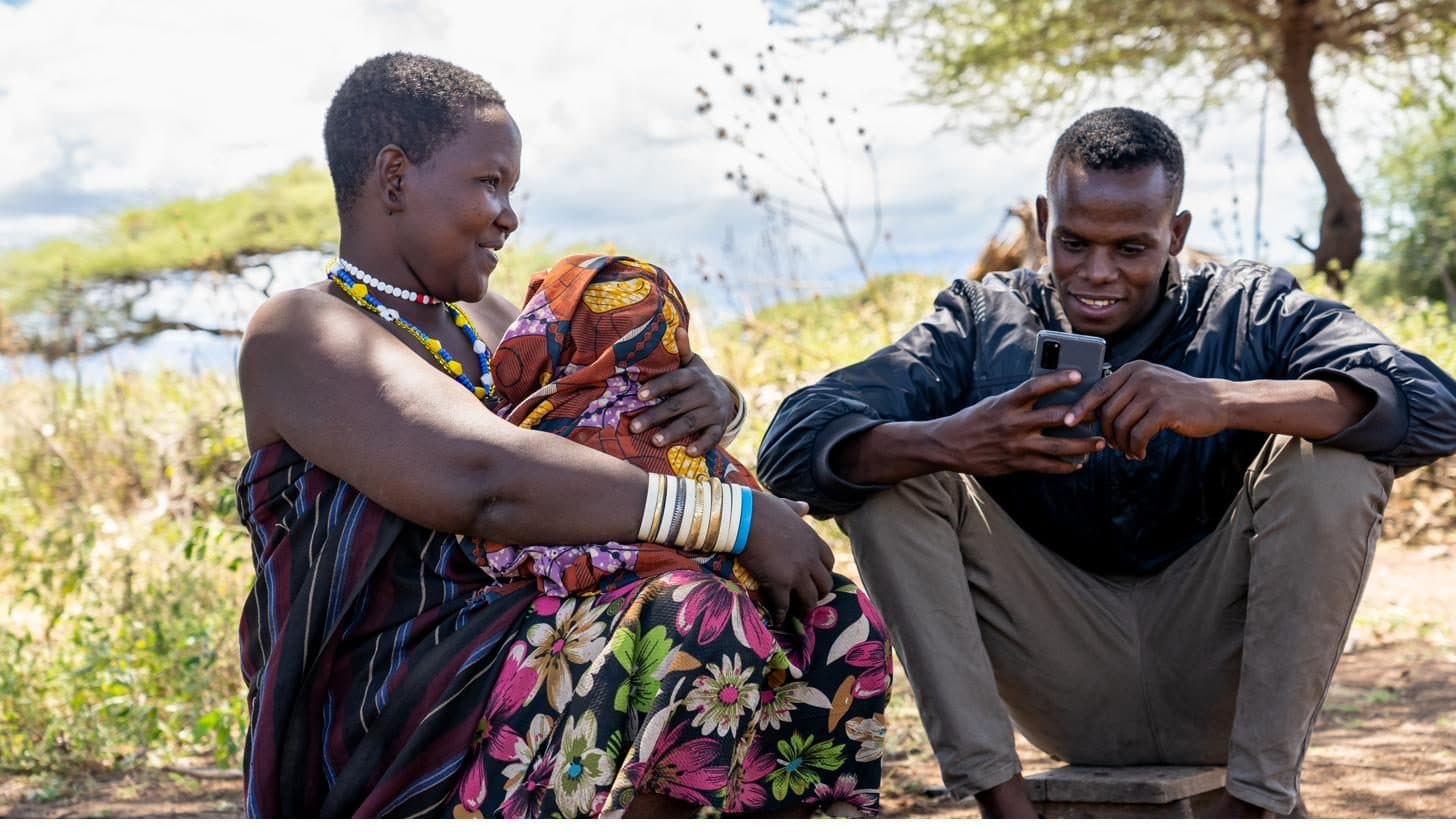
Placing people at the heart of carbon projects.
Measure what your project changes for the communities it affects, in their own words. Then evidence it at validation, to investors and to buyers.
You can report the tonnes. Can you report what changed for people?
Carbon projects can say what they sequestered and what they spent. It's much harder to say what changed for the communities living with the project, whether that change lasted, and whether those communities are still with you years into a forty-year agreement. As standards tighten and buyers look harder, that gap is becoming a risk to validation, investment and sales.
“When a buyer asks what the revenue achieved, we can only tell them what we spent it on.”
Carbon project developer
Reflect for Carbon is a continuous learning platform for measuring social change in carbon projects. It evaluates social outcomes and the people side of risk, as defined by community stakeholders themselves.
It fits into the projects and monitoring you already run, at any stage of development. It strengthens integrity without becoming a duplicate exercise, and it builds capacity inside your organisation rather than drawing on capacity you don't have.
Design → Measure → Learn → Tell
Design
Community is not one thing. Stakeholder mapping pushes past the broad label to who is involved, affected or influential, including people bearing costs they have no voice in. You then build a theory of change with community input, group by group, and can revise it without breaking your evidence trail.
Measure
A forest inventory cannot misreport itself. A household survey can. What people say shifts depending on who asks and what they think you want to hear, so every theme, indicator and question in the knowledge base is peer reviewed before it's used. Surveys work offline in the field and are aligned to carbon standards and the SDGs.
Learn
A single survey only tells you where things stand at one moment. Ask different groups at different intervals: a baseline, a midline, an annual round, or a short pulse after something changes. Findings come written out by stakeholder group, with the indicator and sample size attached, rather than averaged into one figure.
Tell
Report what changed for people, grounded in transparent data the community defined, so your claims hold up when someone looks closely.
What it does for you
Evidence that holds up at validation.
You get a method you can name and workings you can show, aligned to the standards you report against. It meets what the standards ask and goes beyond generic indicators and minimum safeguards. The social science is built in, so you don't need to hire it.
The people side of risk, managed.
Community risk is scored and tracked like every other risk category, across your whole portfolio. You get early sight of a community turning against a project while the relationship is still recoverable, and a record of harm identified and acted on, to show investors that the biggest risk to the asset is being managed.
A real answer to “what did the revenue achieve?”
Reflect measures what changed for people, not how many took part, and tracks whether those changes last. An optional social return on investment study puts a value on what communities chose to invest in.
What's included
Identify who is affected, influential or involved, and score how much real say each group has.
Map activities and outcomes with community input, and revise them without breaking your evidence trail.
Themes, indicators and questions approved before use, so you're not designing surveys from scratch.
Collect social data offline, aligned to carbon standards and the SDGs, from a single baseline to repeat rounds.
View trends and read findings written up by stakeholder group, not averaged into one figure.
Track the risks each group told you they face, with mitigation plans and dates attached.
In-app guidance throughout. Account-managed plans add a dedicated account manager and help interpreting and communicating your data.
Why trust it
Built by people who ran carbon projects. Marc Baker and Jo Anderson founded Carbon Tanzania and its parent company, Level. For fifteen years they designed and ran conservation and carbon projects, and kept running into the problem Reflect now solves.
Grounded in thirty years of social science. Dr Kate McAlpine spent three decades working out how to measure social change properly. She built the knowledge base and the technology Reflect runs on.
 Dr Kate McAlpineCEO
 Emma BarberCo-founder
 Hope BeattyCo-founder
 Jo AndersonLevel board representative

Reflect runs on infrastructure built and maintained by ConnectGo.
Pricing
| Tier | Self-service | Account managed |
|---|---|---|
| Tier 11 to 2 projects | £5,775$7,854 | £8,025$10,914 |
| Tier 23 to 4 projects | £13,860$18,850 | £18,360$24,970 |
| Tier 35 or more projects | £18,766$25,522 | £27,766$37,762 |
Self-service
The full platform, run by your team with in-app guidance.
Account managed
Everything in self-service, plus set-up, facilitation and a dedicated account manager.
Social change you can evidence.
Book a demo and we'll walk you through the platform on a project like yours, or start a subscription and run it yourself.